
Skip to content
Scypion Finance
  • First Principles
  • The Library
  • The Lexicon
  • Tools
  • Videos
/
Scypion Finance

Data over opinion. Evidence over emotion.

YT𝕏∿
About
  • Company
  • Leadership
  • Contact
  • Editorial Standards
Legal
  • Terms of Use
  • Privacy Policy
  • Cookie Policy
  • Disclaimer

Scypion Finance is for educational and informational purposes only and is not financial, investment, tax, or legal advice. Reading this site does not create an advisory relationship. Markets carry risk; consult a licensed professional before acting on anything you read here.

Accessibility
© 2026 Scypion Finance. Founded by Erajah Scypion.Your money, and the forces that move it.

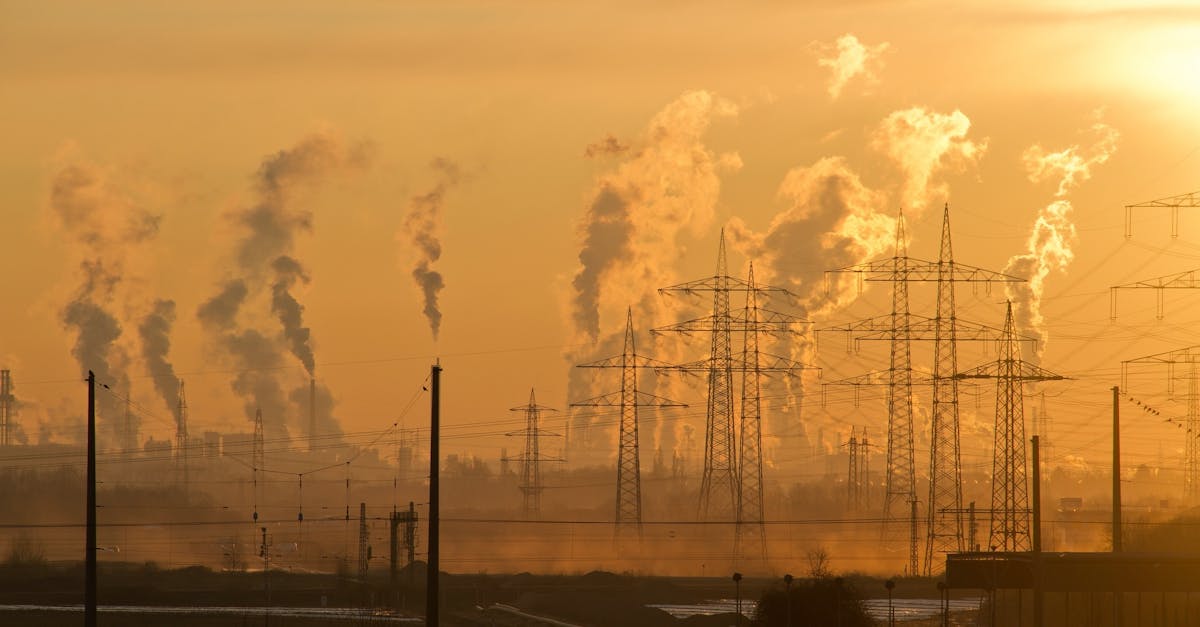
Photo by Pixabay on Pexels

Home›The Economy›Global & Applied›Applied Economics

Cap-and-Trade: Using Markets to Cut Pollution Efficiently

Erajah Scypion
Erajah ScypionFounder, Scypion Finance
5 sources3 min readUpdated June 14, 2026
◆ Key Takeaways
  • Cap-and-trade sets a maximum quantity of pollution, distributes tradeable permits equal to the cap, and lets markets determine where and how reductions occur
  • Firms with low abatement costs reduce emissions and sell excess permits; firms with high abatement costs buy permits — total emissions are fixed at the cap regardless
  • Cost efficiency is the key advantage over command-and-control standards: the same emission reduction is achieved at lower total cost because reductions happen where they are cheapest
  • The permit price functions as an implicit carbon price, creating ongoing incentive for innovation and technology adoption
On this page
  • What it is
  • The intended effect
  • The tradeoff
  • How it plays out in practice

The 1990 Clean Air Act Amendments launched the first major U.S. cap-and-trade program, targeting sulfur dioxide (SO₂) emissions from power plants — the primary cause of acid rain. The cap was set at half the 1980 emission level; permits equal to the cap were distributed to covered sources; firms could buy or sell permits freely. By 2007, SO₂ emissions had fallen below the cap target, at a cost roughly 50 percent lower than EPA estimates of what command-and-control standards would have required. The market had achieved the environmental target while finding the cheapest path to get there — companies that could reduce cheaply did so and sold permits; those facing high reduction costs bought permits instead. The environmental outcome was fixed by the cap; the economic efficiency was created by the trading.

What it is

Cap-and-trade is a market-based environmental policy mechanism that:

  1. Sets a cap: the regulator establishes a maximum total quantity of a pollutant that may be emitted across all covered sources in a period.
  2. Distributes permits: permits equal to the cap are issued — either free to existing emitters (grandfathering) or auctioned to the highest bidders. Each permit authorizes emission of one unit of the pollutant.
  3. Enables trading: firms with more permits than they need (because their abatement is cheaper than the permit price) sell the surplus; firms needing more permits than they hold buy them. The market price of permits reflects the marginal cost of abatement for the marginal permit seller.

This mechanism achieves the environmental target (total emissions ≤ cap) with cost efficiency (reductions happen where they're cheapest).

The intended effect

Cap-and-trade's efficiency advantage over prescriptive standards is fundamental: a standard requires every source to reduce by the same percentage, regardless of whether some can reduce cheaply and others face enormous costs. Cap-and-trade directs reduction to the cheapest sources first. The permit market price equals the marginal abatement cost of the marginal reducer — the break-even point where it costs as much to abate as to buy a permit.

The EPA's Acid Rain Program data documents the cost advantage: SO₂ reductions were achieved at approximately $700–900 per ton, versus EPA projections of $1,500–3,000 per ton under command-and-control alternatives. The market found cheaper reductions through fuel switching, operational changes, and installation of scrubbers on the plants where they were most cost-effective.

The tradeoff

Cap-and-trade requires: a well-defined, monitorable cap; accurate emissions measurement and reporting; sufficient market liquidity for efficient permit trading; and political consensus on the cap level. Where these conditions don't hold, cost efficiency advantages shrink or disappear.

The distributional concern is hot spots: if permits are purchased heavily by plants in specific geographic areas, local emission concentrations may remain high even as aggregate emissions fall to the cap. This is a genuine equity concern in programs covering locally harmful pollutants (as opposed to well-mixed global pollutants like CO₂, where the hot-spot problem is less severe).

How it plays out in practice

The California cap-and-trade program, launched in 2013 and covering approximately 85 percent of the state's greenhouse gas emissions, is the largest U.S. carbon market. The California Air Resources Board auction data shows quarterly permit auctions generating billions in state revenue (which funds clean energy and equity programs) while achieving verified emissions reductions — the program's dual mandate of environmental performance and economic efficiency both being met.
◆ Sources

  1. Acid Rain Program — U.S. Environmental Protection Agency
  2. Cap-and-Trade Program — California Air Resources Board
  3. Congressional Budget Office — Climate Policy Analysis
  4. Cap and Trade — Investopedia
  5. Emissions Trading — Library of Economics and Liberty
On this page
  • What it is
  • The intended effect
  • The tradeoff
  • How it plays out in practice
◆ Related reading
  • Platform Economics: The Two-Sided Markets That Reshape Industries
  • Zoning: Land Use Regulation and Its Economic Consequences
  • Platform Economics: Two-Sided Markets, Network Effects, and Why Winner-Takes-Most
  • The Network Effect: Why Some Products Become More Valuable as They Grow
All Applied Economics →
◆ SHARE
Erajah Scypion
Erajah Scypion
Founder, Scypion Finance

I got interested in economics the hard way — by not understanding what was happening around me. I'd read an explanation, nod along, and walk away knowing no more than when I started. After enough of that, I stopped looking for the resource I wanted and started writing it.

View full profile →

More in Applied Economics

All Applied Economics →
◆ APPLIED ECONOMICS

Thinking Like an Economist: The Mental Frameworks That Stay With You

You'll forget the equations. What stays is five tools — opportunity cost, marginal thinking, incentives, trade-offs, equilibrium — that improve every decision.

9 min read
Read →
◆ APPLIED ECONOMICS

Switching Costs: The Friction That Keeps Customers Locked In

Switching costs are the costs a buyer incurs when changing from one supplier or product to another.

4 min read
Read →
◆ APPLIED ECONOMICS

Housing Markets: What Happens When Supply Can't Keep Up With Where People Want to Live

Home prices have outrun incomes for years. The reason is inelastic supply: housing takes years to build, and zoning caps it where demand is highest.

7 min read
Read →
◆ APPLIED ECONOMICS

Healthcare as a Market: Why the Economics of Medicine Break Every Standard Model

U.S. health spending hit $5.3 trillion in 2024. Three features break the standard market: asymmetric information, third-party payment, and inelastic demand.

8 min read
Read →

◆ THE NEWSLETTER

Money, made clear

Personal finance and the economy, broken down — numbers shown, every claim sourced.

Only when it's worth your time. No spam, unsubscribe anytime.